Landowners and hunters wanting to produce bigger and better white-tailed deer through deer management practices are often looking for an economical way to provide supplemental foods. Food plots are a common way to provide additional forage, but often times the most cost is associated with high protein foods. Protein pellets are the most common supplement delivered through feeders, but other options exists, such as roasted soybeans and whole cottonseed. But is feeding cottonseed to deer a good idea, and does it work?
The intensity of deer management across much of the whitetail’s range is high and many managers provide supplements to meet management and deer nutrition goals. Many managers have considered cottonseed as a supplement to pelleted feeds because cottonseed delivers a high amount of protein (23% protein) and it does not easily degrade, even in under moist conditions. In addition, in many areas cottonseed is readily available and much less expensive (half the cost) than formulated pellets. Lastly, cottonseed is not readily eaten by animals other than deer because it contains the chemical gossypol, which protects cotton plants from herbivores.
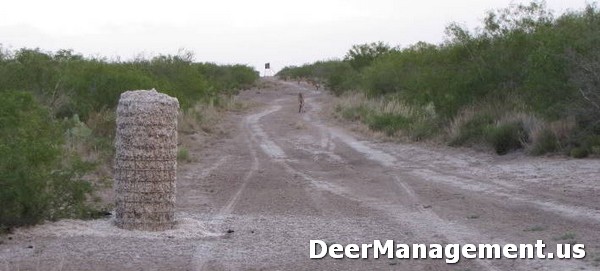
In the past, gossypol was considered to be a potential problem associated with feeding cottonseed to whitetail, but research has shown it does not have any substantial negative impacts to deer. Gossypol has greater negative impacts on monogastric mammals such as raccoons and feral hogs than it does ruminants such as cattle and white-tailed deer. However, research has found that gossypol can reduce antler density, body condition, and sperm quality in cervids.
Though findings suggest that cottonseed can cause some problems when eaten in very high amounts, cottonseed can work very well as a supplemental protein source when implemented into an overall deer management program. First, cottonseed should strictly be used as a supplement, not supplied to penned deer as a full ration. When provided in the habitat of free-ranging deer, animals will consume additional food sources, such as forbs, browse, and mast, in addition to cottonseed. In addition, to avoid infertility in bucks cottonseed should not be made available to deer within 6 weeks of the breeding season.
Whole cottonseed is high in protein and makes an excellent alternative to formulated pellets as a supplemental protein. Feeding cottonseed to whitetail deer is a good deer management practice that can pay dividends in the form of bigger, healthier deer, better deer hunting, and the fact that it is less expensive than other protein sources. Roasted soybeans (35% protein) are also an option for landowners and hunters interested in provided whitetail with supplemental food sources, but they are more expensive than either cottonseed or pellets.
I have had no negative feedback from feeding cottonseed. In fact, it has helped our whitetail herd tremendously. Our ranch has been feeding cottonseed for several years now, and with limited rainfall back in 2009 we still had superior body weights and horn development. I am not saying that cottonseed is the best feed on the market, I am just saying that it has worked well for us and we have had no negative effects so far.
Where can I buy cotton seed? I live in Pearland, Texas, and hunt between George West and Freer.
You can buy Cottonseed in Freer at Susie’s Farm and Ranch (361-394-9901) $13.00 dollars for a 50 pound bag.
Eloy, thanks for hooking up the deer hunters in the Freer area. Whole cottonseed is an especially good post-rut food for putting some weight back on bucks.
Oasis in Uvalde sells 50# bags for 10.50 ea
How does the cubes work? Says 38% protein.
We’ve had success as well with whole cottonseed, but living in Dallas and hunting in Archer City TX, it’s very hard to find. Any suggestions that might sell whole seed?
Chris, I don’t know of any cottonseed dealers in that area off hand. Cotton is farmed north of there so odds are there are some dealers nearby.
Can anyone tell me where might cotton seed be purchased in the Cuthbert, GA, area?
A FEW DEALERS WHO CARRY COTTON SEED IN TX:
BULVERDE FEED & SEED LLC- Bulverde Tx
LLANO FEED & SUPPLY- Llano Tx
DE WITT CTY PROD- Cuero Tx
E BARR FEED- Gonzales Tx
WEST BEAR CREEK
GONZALITOZ GROC FD- Alice Tx
SAN SABA PRODUCE-San Saba Tx
BLUE RIBBON COUNTRY STORE
KING FEED-Wimberley Tx
BELTON FEED & SUPPLY- Belton Tx
ODIORNE FEED & RANCH SUPPLY- Johnson City Tx
LAREDO RANCH HEIGHTS- Laredo Tx
COUNTRY BOYS FEED AND SUPPLY- Rock Springs Tx
BRADY FEED & FERTILIZER- Brady Tx
Most Tractor Supply stores sell cotton seed.
Feeding cotton seed in an open container. Do you have to worry about rain on it will it dry out okay, or does it need to be covered
Do turkeys eat cottonseed?